A Vuong Hydropower Plant is a landmark in the development of hydropower in Central Vietnam; PSC carried out all survey work across every stage of the project.
A Vuong Hydropower Plant is a landmark of hydropower development in Central Vietnam in the early 21st century. The project was built in a mountainous area with complex topographic, geological and hydrological conditions, requiring close coordination between the owner, consultants, surveyors, designers, contractors, equipment suppliers and operators.
Since entering service in 2008, the plant has contributed billions of kWh to the national grid, helped regulate water resources and supported downstream water supply. The experience gained from surveying, designing, building and operating A Vuong remains valuable for developing technically demanding hydropower and energy infrastructure projects.
For PSC, A Vuong is not just another project in its portfolio but part of its growth through key energy projects. The experience of working in complex mountainous terrain under demanding data accuracy and schedule requirements continues to be carried forward, developed and applied in energy, transportation, industrial and infrastructure projects nationwide.
PSC carried out all survey work for the following stages:
- Pre-feasibility study;
- Feasibility study;
- Technical design;
- Construction drawings and designer’s supervision;
- Acceptance;
- Operation.
1. Project overview
A Vuong Hydropower Plant is one of the key hydropower projects on the Vu Gia – Thu Bon river system. It was built on the A Vuong River in the mountainous Dong Giang and Tay Giang districts of Quang Nam Province, as they were at the time of the project.
With an installed capacity of 210 MW and an average design output of about 737 million kWh per year, A Vuong supplies power to the national grid, strengthens the ability to meet demand in Central Vietnam and supports energy security.
Besides generating power, the A Vuong reservoir helps regulate water in the Vu Gia – Thu Bon basin, reducing floods in the rainy season and supplementing downstream water in the dry season. Its operation must therefore balance several goals: dam safety, power generation, disaster prevention, downstream water supply and efficient use of water resources.
The Prime Minister approved the investment in Decision No. 317/QĐ-TTg dated 21 March 2003. Construction began in August 2003; Unit 1 began generating on 11 October 2008 and Unit 2 on 28 December 2008. The plant’s inauguration ceremony was held on 10 July 2010.
2. Key information
- Project name: A Vuong Hydropower Plant
- Project type: Hydropower
- River: A Vuong River
- Basin: Vu Gia – Thu Bon
- Location: Mountainous area of Dong Giang and Tay Giang, Quang Nam Province, at the time of the project
- Original owner: Vietnam Electricity (EVN)
- Operator: A Vuong Hydropower Joint Stock Company
- Installed capacity: 210 MW
- Number of units: 2 units
- Average design output: About 737 million kWh/year
- Normal water level: 380 m
- Dead water level: 340 m
- Investment decision: Decision No. 317/QĐ-TTg dated 21 March 2003
- Construction start: August 2003
- Unit 1 commissioned: 11 October 2008
- Unit 2 commissioned: 28 December 2008
- Inauguration: 10 July 2010
- Grid connection: National power grid
- Main functions: Power generation, water regulation, flood mitigation and downstream water supply
Main components
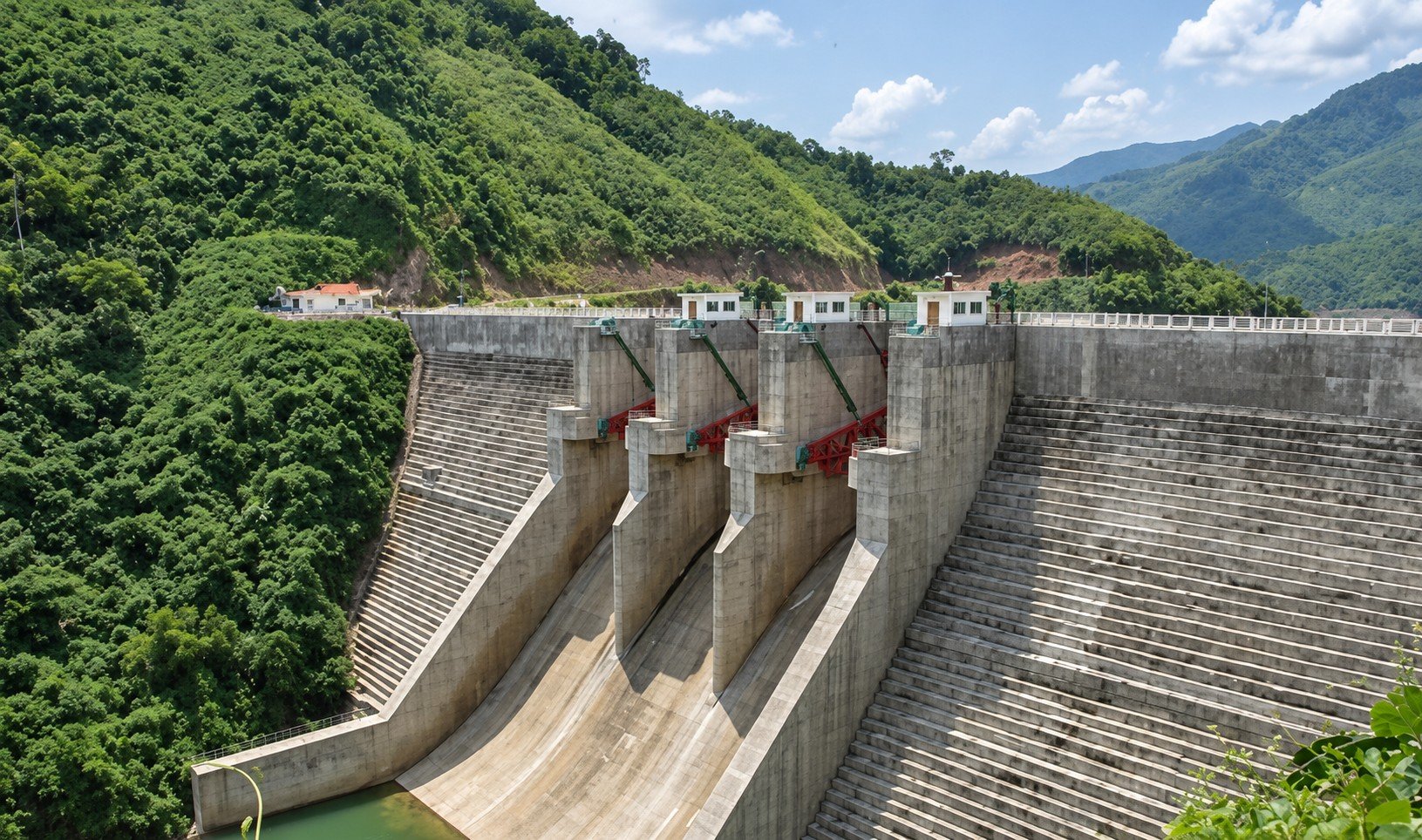
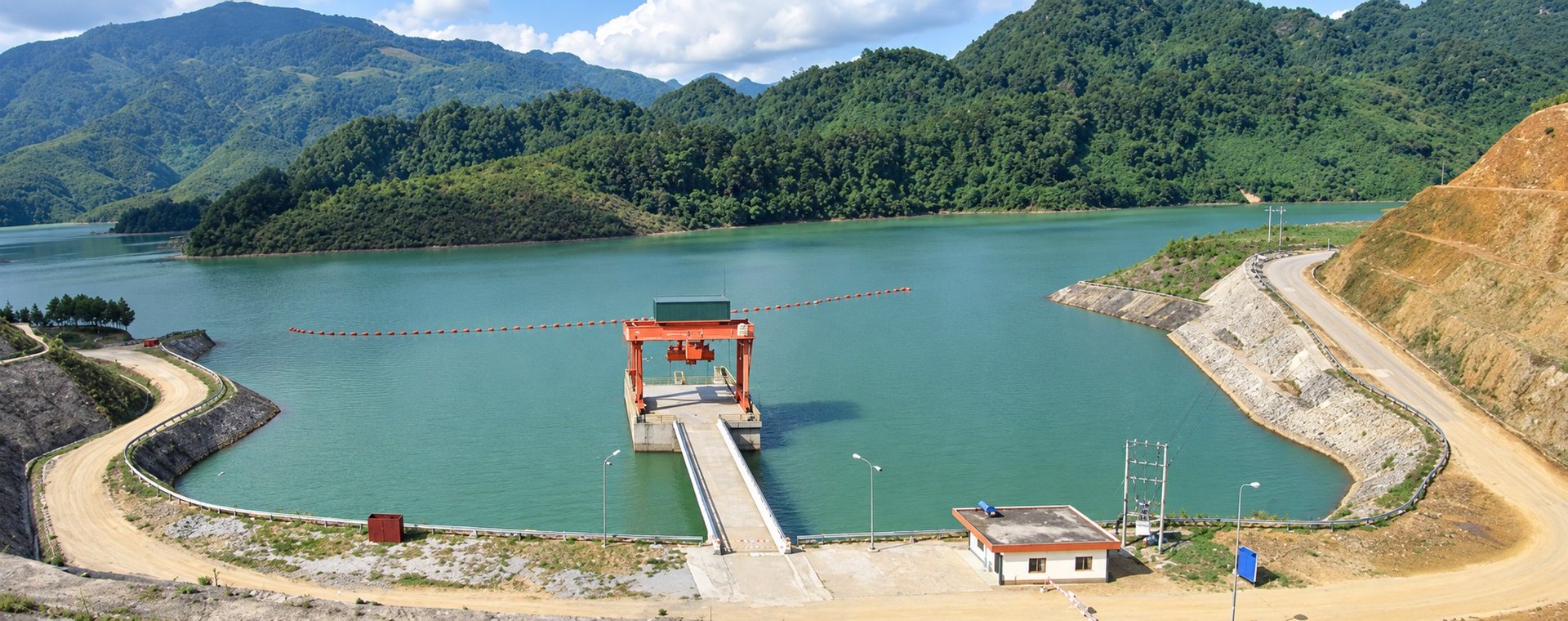
- Reservoir: Normal water level 380 m; flood water level 382.2 m; dead water level 340 m; spillway crest 363 m; total storage 343.55 million m³; active storage 266.5 million m³; dead storage 77.07 million m³; reservoir area at normal water level 9.09 km²
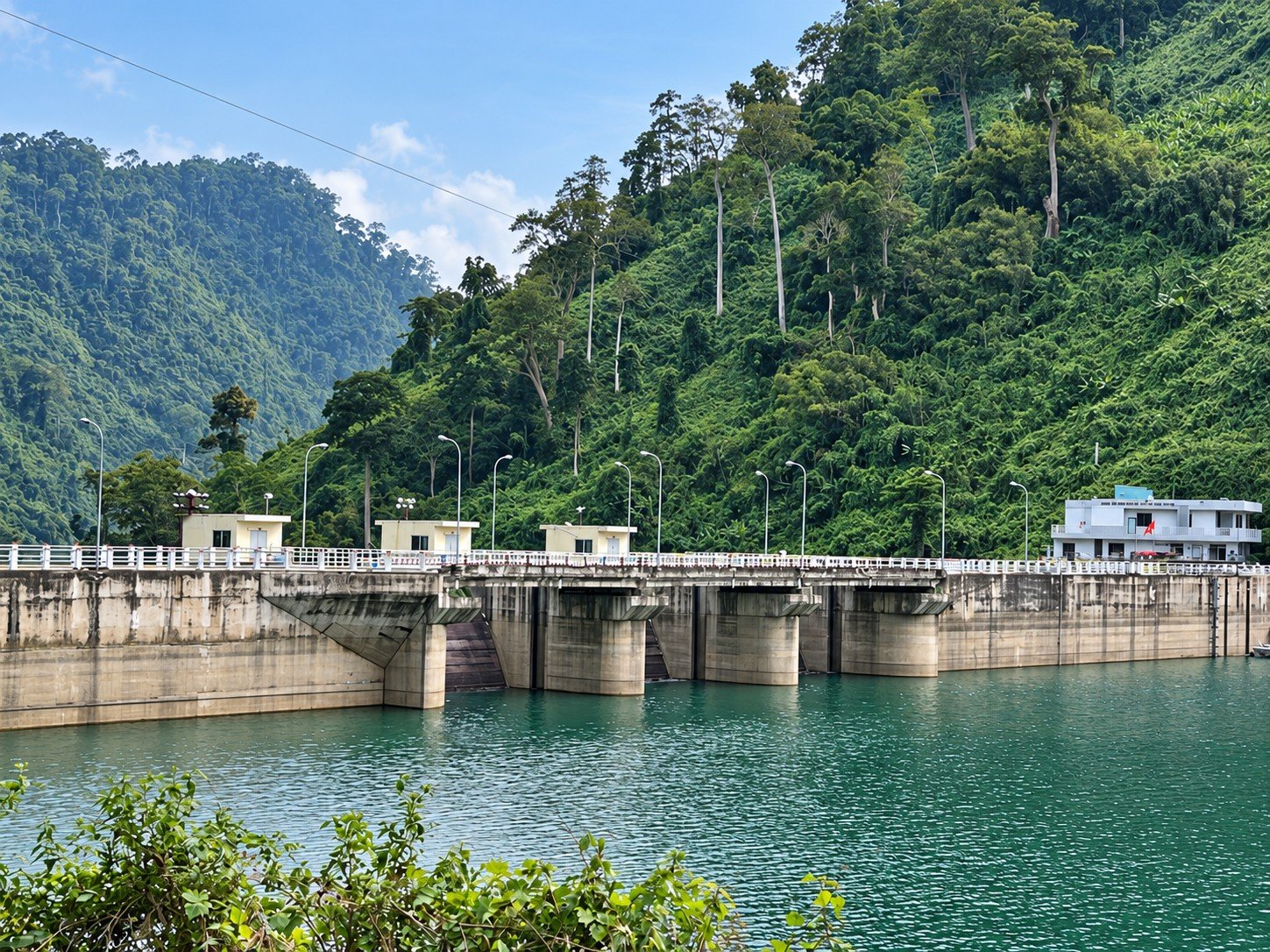
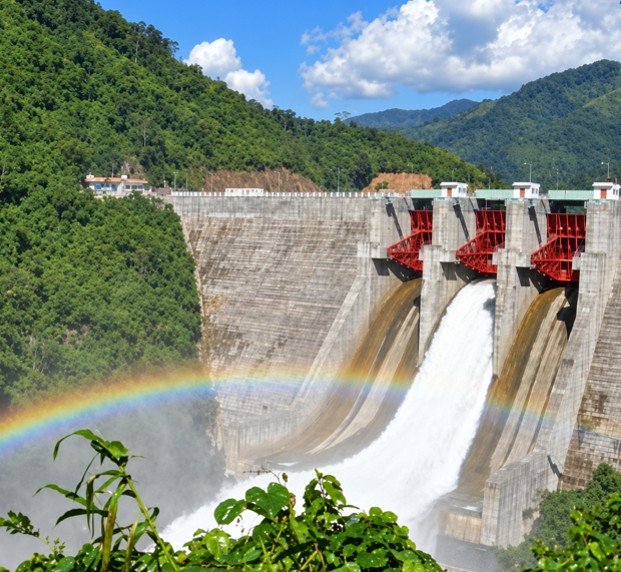
- Main dam: Crest elevation 383.4 m; maximum height 80 m; crest length 228.1 m
- Spillway: Surface spillway with 3 radial gates, each 14 × 17.5 m; design discharge at normal water level 5,720 m³/s
- Intake: Tower type; 2 bays; trash racks 5 × 8 m
- Headrace tunnel: Length 5,276 m; inner diameter 5.2 m; circular section; concrete lining
- Surge tank: Chamber diameter 28 m; shaft diameter 9 m; height 105 m
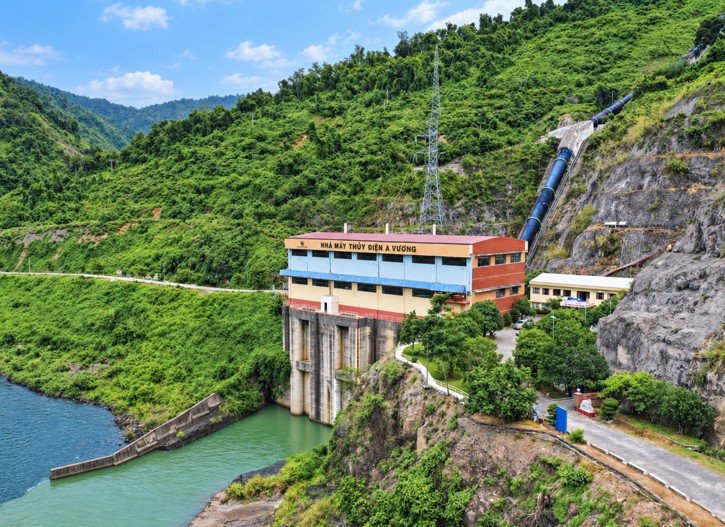
- Penstock: Length 517.3 m; diameter 3.8 m
- Powerhouse: Qmax 78.4 m³/s; Hmax 320 m; rated head 300 m; Hmin 265 m
3. Key engineering challenges at A Vuong
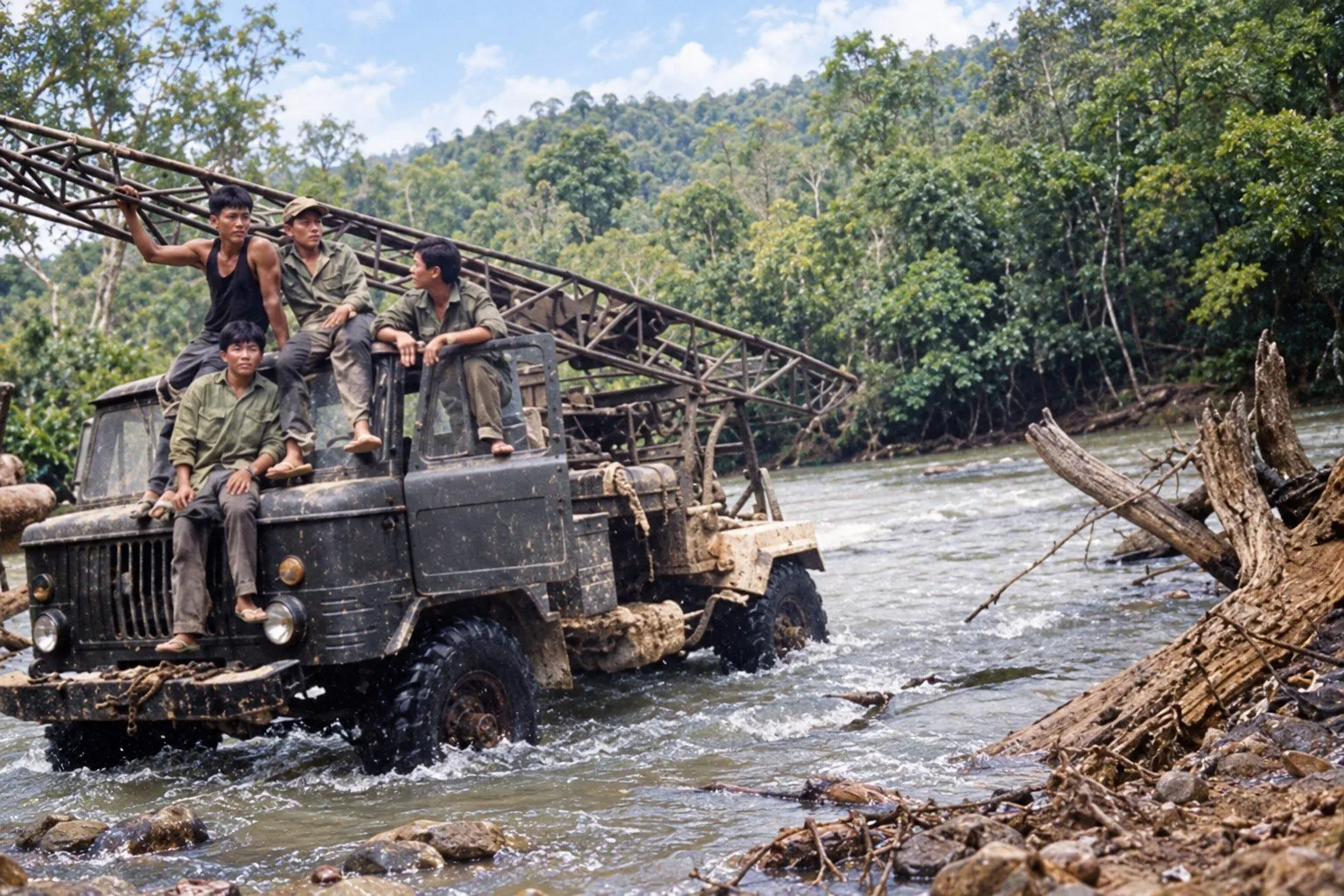
- Complex mountainous terrain: Steep, heavily dissected terrain and limited access made surveying, equipment transport, site layout and construction more difficult. Many locations required terrain-appropriate equipment combined with field experience to reach them safely.
- Variable geological conditions: Accurately determining bedrock structure, weathering thickness, joint systems, faults and seepage conditions was decisive for foundation design and treatment. Incomplete survey data could lead to design changes, additional work or construction delays.
- Central Vietnam’s heavy rain and floods: The Vu Gia – Thu Bon basin has heavy rainfall, fast-rising floods and frequent storms and tropical depressions. The plant had to be designed and operated to ensure dam safety, flood discharge capacity and reduced impact on downstream areas.
- Tight survey and design schedule: Completing the technical design and construction drawings for groundbreaking in about seven months required mobilizing multiple specialist teams, processing large volumes of data quickly and continuous coordination between field surveys and design.
- Working in hard-to-reach areas: Bringing people, machinery, materials and large electromechanical equipment to a mountain site was a significant challenge. Access roads and support infrastructure had to be built to suit the terrain and the overall project schedule.
- Safety control throughout the asset lifecycle: A hydropower plant must be safe not only during construction but also continuously monitored in operation. Seepage, displacement, water pressure, dam deformation and slope stability must be tracked and assessed regularly.
4. The importance of surveys for the project
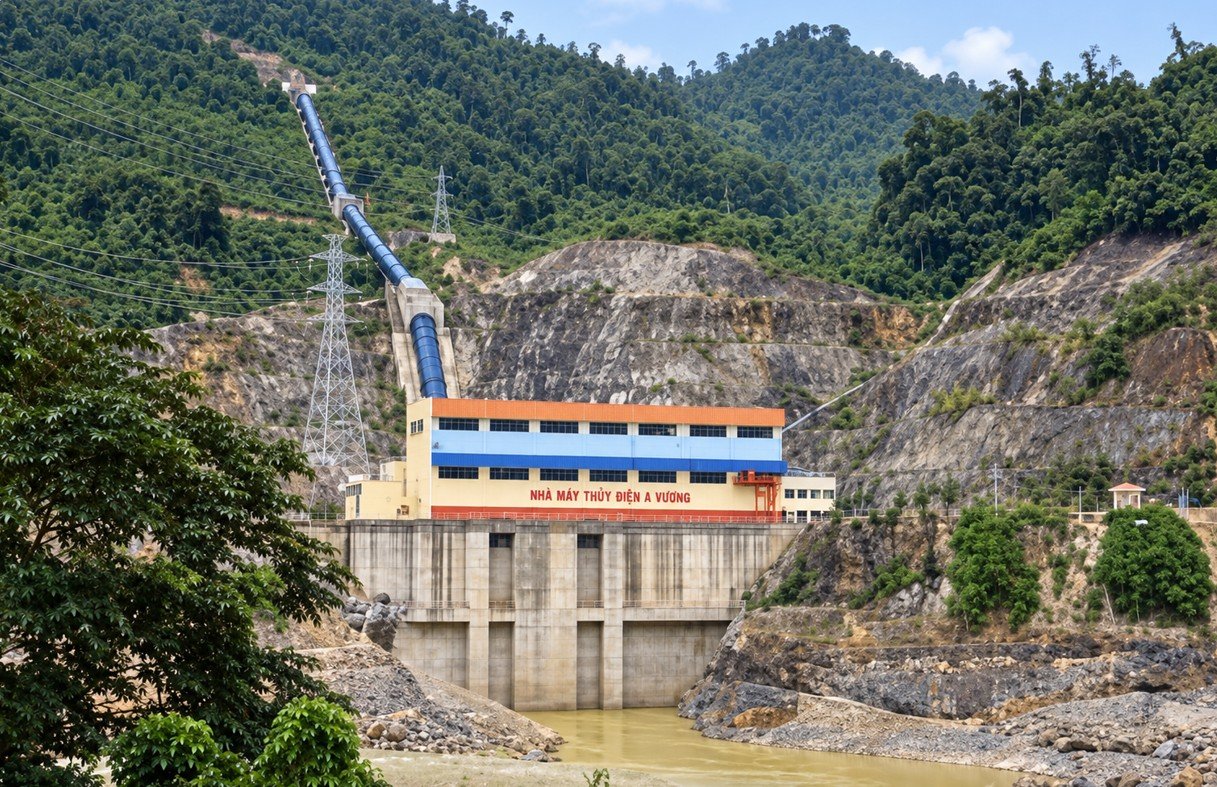
A Vuong was built in a mountainous area with heavily dissected terrain, steep slopes, narrow valleys, difficult access and seasonal weather changes. Surveys were therefore especially important for selecting the project layout, technical design and construction planning.
PSC’s survey work for the project included:
- Establishing horizontal and vertical control networks.
- Topographic mapping of the headworks, waterway and powerhouse areas.
- Topographic surveys of the reservoir and project-affected areas.
- Geological investigation of the dam foundation, spillway and auxiliary structures.
- Geological investigation of the intake and waterway alignment.
- Geological investigation of the powerhouse area.
- Investigation drilling, sampling and testing of soil and rock properties.
- Investigation of weathering zones, joints, faults and seepage conditions.
- Hydrometeorological monitoring, data collection and analysis.
- Surveys of access roads and construction infrastructure.
- Boundary staking for the project, reservoir and site clearance areas.
- Check surveys, as-built surveys and monitoring during construction.
Survey data form the basis for determining foundation conditions, selecting structural types, analysing stability and controlling construction quantities. The accuracy and consistency of the data directly affect design quality, construction schedules, investment costs and the safety of the structure throughout its operating life.
5. Project development and investment preparation
A Vuong was studied as part of the plan to develop the hydropower potential of the Vu Gia – Thu Bon river system, a basin with large hydropower potential but complex topographic, geological and hydrological conditions.
During investment preparation, the project had to address many technical tasks at once:
- Studying the flow regime and hydropower potential of the A Vuong River.
- Selecting the dam axis and overall project layout.
- Locating the reservoir, intake, waterway and powerhouse.
- Surveying topographic, geological, hydrological and environmental conditions.
- Determining installed capacity and energy output.
- Assessing the reservoir’s impact on residents, land, forests and livelihoods.
- Developing compensation, site clearance and resettlement plans.
- Studying access roads and construction infrastructure.
- Evaluating economic and technical efficiency and grid connection options.
On 21 March 2003, the Prime Minister issued Decision No. 317/QĐ-TTg on investment in the A Vuong Hydropower Project, providing the legal basis for design, site clearance, resource mobilization and construction.
Surveying was the most important task in the development and investment preparation stage of A Vuong Hydropower Plant.
6. Design stage
The A Vuong design was developed by integrating topographic, geological, hydrological and environmental data with the basin’s energy development needs.
The design had to ensure full coordination among the following components:
- Dam and water-retaining structures.
- Reservoir.
- Spillway.
- Gates and hydromechanical equipment.
- River diversion works.
- Intake.
- Waterway and power conduit.
- Powerhouse.
- Electromechanical equipment.
- Switchyard.
- Grid connection works.
- Operation access roads.
- Dam safety monitoring system.
- Downstream communication and warning system.
- Operation management area and auxiliary facilities.
Completing the technical design and construction drawings in a short time placed high demands on coordination between surveying, design and construction planning. Input data had to be updated promptly, tightly controlled and consistent across all disciplines.
7. Construction
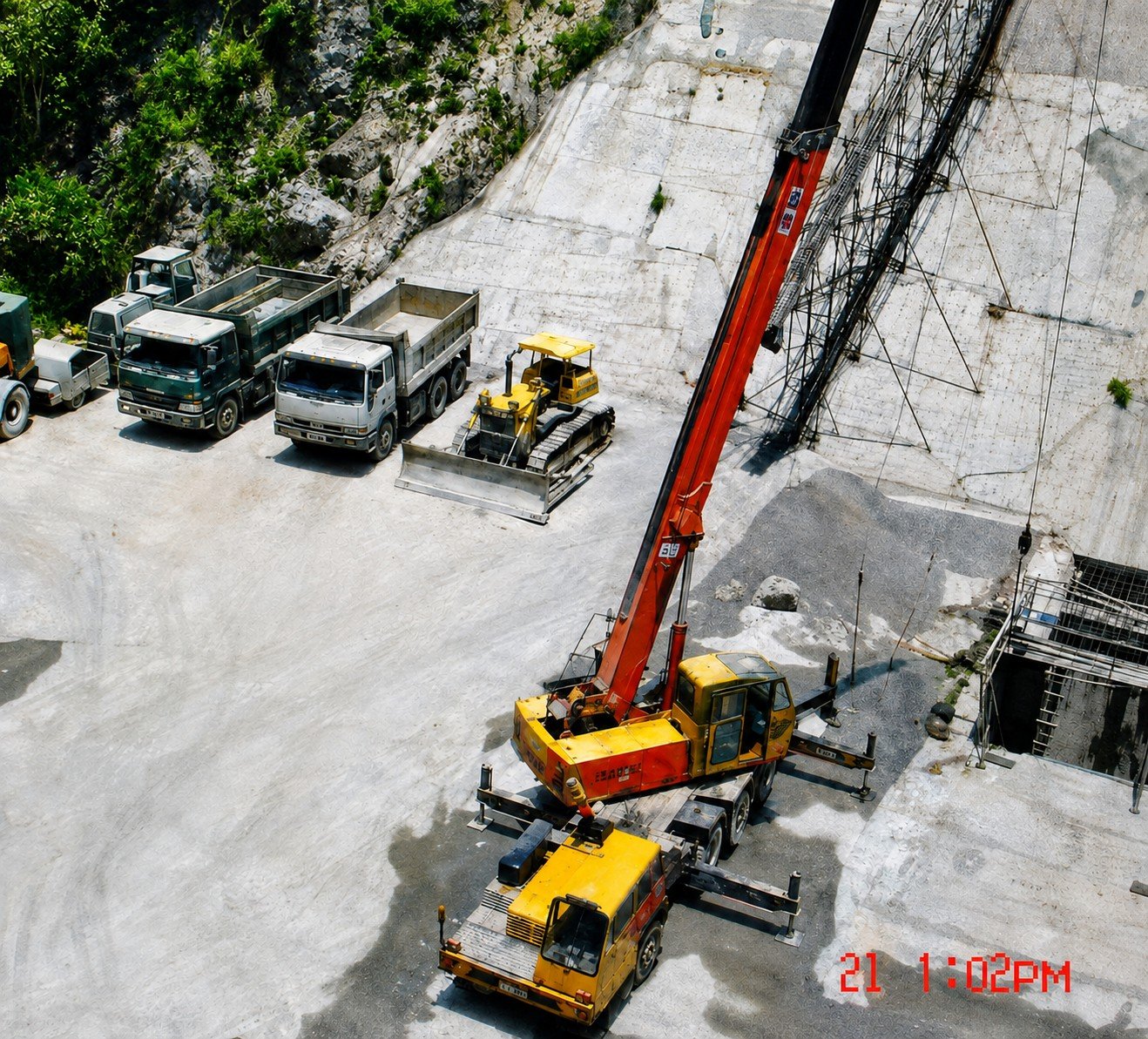
Construction of A Vuong began in August 2003, in mountainous terrain with scattered work areas, difficult access and sharply contrasting rainy and dry seasons.
The main works included:
- Building site access roads.
- Site preparation and auxiliary areas.
- River diversion works.
- Excavation and treatment of the dam foundation.
- Construction of the dam and spillway.
- Construction of the intake and waterway.
- Construction of the powerhouse.
- Installation of gates and hydromechanical equipment.
- Installation of turbines, generators and auxiliary equipment.
- Construction of the switchyard and grid connection.
- Installation of control, protection and communication systems.
- Installation of the structural safety monitoring system.
- Completion of operation and management infrastructure.
Construction had to follow the flow regime of the A Vuong River. Riverbed, diversion and foundation works were scheduled for periods of favourable hydrological conditions to reduce flood risk.
Another key requirement was maintaining consistent accuracy across surveying, design and construction. Deviations in position, elevation or geometry at the dam, waterway or equipment areas could affect how components fit together, the equipment installation schedule and operational safety.
8. Reservoir impoundment, testing and commissioning
Once the main works passed acceptance, the project moved on to reservoir impoundment, equipment checks and unit testing. The main tasks in this stage were:
- Checking safety conditions before impoundment.
- Monitoring reservoir water levels.
- Monitoring seepage, displacement and deformation.
- Testing gates and the spillway.
- Testing hydromechanical equipment.
- No-load and load tests of the generating units.
- Checking control and protection systems.
- Testing electrical systems and grid connection.
- Tuning operating parameters.
- Completing acceptance and handover documents.
Unit 1 began generating on 11 October 2008, followed by Unit 2 on 28 December 2008. Bringing both units online completed the project’s main generation goal after more than five years of construction. A Vuong Hydropower Plant was officially inaugurated on 10 July 2010.
9. Management and operation
A Vuong Hydropower Joint Stock Company was established on 24 December 2007 to take over, manage and operate the plant. Since entering service, the plant has carried out the following tasks:
- Operating the units according to grid requirements.
- Managing and operating the reservoir safely.
- Inspecting, maintaining and repairing equipment.
- Monitoring dam and structural safety.
- Following the reservoir operating procedure.
- Coordinating inter-reservoir operation in the basin.
- Providing hydrological information to authorities.
- Issuing warnings when discharge changes.
- Preparing disaster and emergency response plans.
- Working with local authorities to keep downstream areas safe.
Over time, the technical team mastered the technology and carried out much of the maintenance, testing and equipment tuning in-house. Control system upgrades, unit maintenance and process improvements continue to maintain the plant’s reliability.
10. Monitoring, maintenance and equipment upgrades
The safety of a hydropower plant depends on continuous inspection and monitoring throughout its operating life. Items to be monitored include:
- Dam body displacement.
- Settlement and deformation.
- Seepage flow and pressure.
- Reservoir and tailwater levels.
- Foundation and slope stability.
- Condition of gates and hydromechanical equipment.
- Unit vibration and temperature.
- Control and protection systems.
- Reliability of electrical equipment.
- Condition of the waterway and auxiliary structures.
Alongside routine maintenance, the plant has progressively upgraded its equipment to maintain safe operation. In 2024, A Vuong Hydropower JSC reported replacing the common distributed control system (DCS) and the unit DCS systems, along with scheduled maintenance and repair of both units.
11. Lessons learned
The development and operation of A Vuong offer many valuable lessons for large-scale energy and infrastructure projects.
- Survey data determine design quality: Accurate topographic, geological and hydrological data help identify risks early, select suitable solutions and limit changes during construction.
- Surveying and design must work in step: Under tight schedules, field information must reach the design teams quickly, and additional design requests must be passed back to the survey teams promptly.
- Construction must follow hydrological conditions: Riverworks must be scheduled around the rainy and dry seasons and flood risk to ensure safety and minimize disruption.
- Structural safety is an ongoing task: Safety does not end when construction is complete. Monitoring, inspection, maintenance and assessment must continue throughout operation.
- Operation must balance many interests: A hydropower plant does not only produce electricity; it also directly affects water resources, disaster prevention, agriculture and the lives of downstream communities.
PSC is committed to being a disciplined, long-term partner to every project.