
Logo PSC Member of PECC2

Long-Term Partnership

CAPABILITY TO UPHOLD A RESPONSIBLE LONG-TERM COMMITMENT TO PROJECTS

INTEGRATED SOLUTIONS – COMPREHENSIVE SERVICES – RESPONSIBLE PARTNERSHIP

MASTER PLANNING AND PROJECT DEVELOPMENT

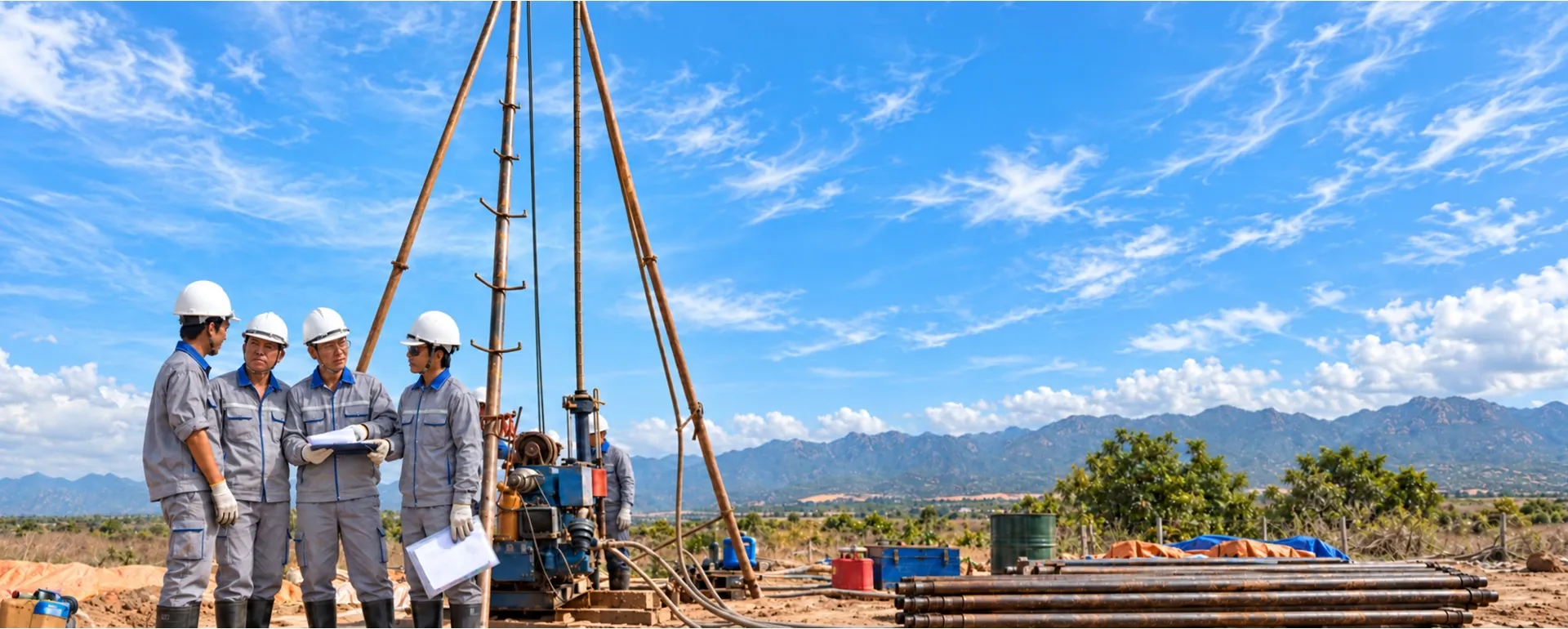
At the project inception stage, PSC supports the collection and development of baseline databases covering topography, geology, hydrology, oceanography, existing infrastructure conditions, site accessibility and other relevant natural factors.

These data support opportunity identification, site screening, comparison of potential locations and preliminary assessment of project development conditions.

PSC SERVICES

  • Collection, review and systematization of existing data.
  • Preliminary reconnaissance of proposed project development areas.
  • Topographic surveys and development of initial spatial datasets.
  • Preliminary identification of geological, hydrological and natural environmental conditions.
  • Assessment of site accessibility, survey arrangements and resource mobilization.
  • Support for the comparison of potential sites or route corridors.
  • Identification of areas requiring detailed surveys in subsequent project stages.
  • Proposal of survey programs tailored to the type and scale of the project.

Value deliveredProvides a systematic baseline database that enables project owners to identify potential adverse conditions at an early stage and define the scope of subsequent investigations.

SELECTED PROJECTS

  • · Hydropower Development Master Plan for the Dong Nai River System.
  • · Revised Hydropower Development Master Plan for the Dong Nai River System.
  • · Hydropower Development Master Plan for the Be River Basin.
  • · Hydropower Development Master Plan for the La Nga River Basin.
  • · Hydropower Cascade Development Master Plan for the Srepok River System.
  • · Hydropower Development Master Plan for Prek Ter and Prek Chhlong, Cambodia.
  • · Hydropower Development Master Plan for the Tra Khuc River Basin.
  • · Phu My Power Complex Master Plan.
  • · O Mon Power Complex Master Plan.
  • · Vinh Tan Power Complex Master Plan.
  • · Duyen Hai Power Complex Master Plan.
  • · Tan Phuoc Power Complex Master Plan.
  • · Dung Quat Power Complex Master Plan.
  • · Rural Electrification Master Plan for Southern Vietnam.
  • · National Power Development Master Plan I.
  • · National Power Development Master Plan II.
  • · National Power Development Master Plan III.
  • · National Power Development Master Plan IV.
  • · National Power Development Master Plan V.

BUILDING ON A STRONG HERITAGE – DEVELOPING INDEPENDENTLY – MAINTAINING RESPONSIBILITY THROUGHOUT

Building on our heritage and developing independently

PSC did not start from scratch. The company inherits over 40 years of experience, human resources, technical capabilities, equipment, procedures and data developed through the continuous operation of PECC2’s survey and testing workforce.

PSC’s establishment as an independent company in 2025 did not interrupt that development. Rather, it was a planned transition to refine the organizational model, specialize the organization and focus more deeply on engineering surveys, infrastructure data, testing – inspection – monitoring, geotechnical construction, foundation treatment, defect remediation and supervision consultancy.

As a wholly owned subsidiary of PECC2, PSC both inherits the foundation built over many decades and proactively develops a long-term strategy, strengthens its management capabilities and expands its ability to provide services across the entire asset lifecycle.


A continuous process of succession

A CONTINUOUS PROCESS OF SUCCESSION, NOT A NEW BEGINNING

PSC’s establishment is the next step in the development of a technical workforce that has worked on numerous energy and infrastructure projects nationwide for over 40 years. PSC inherits all of its specialized resources:

The transition to an independent business model therefore does not interrupt the continuity of capabilities and experience. On the contrary, the new model enables PSC to concentrate resources, establish clear responsibilities and develop deeper expertise in each field of activity.

  • Experience in surveying, testing and technical work across many types of projects.
  • Personnel trained and experienced through numerous projects.
  • Equipment, technologies, methods and work procedures.
  • A foundation in quality management, safety and data control.
  • Experience coordinating with PECC2, project owners, design consultants, contractors and domestic and international partners.
  • Knowledge of the history, foundation conditions and actual behaviour of many projects it has been involved in.
  • The expert ecosystem of EVN and PECC2
Independent development for specialization

INDEPENDENT DEVELOPMENT FOR SPECIALIZATION AND GREATER ACCOUNTABILITY

Operating independently enables PSC to refine its management structure, specialize its technical units and develop an investment strategy suited to the market’s increasingly demanding requirements.

PSC aims to become a technical partner capable of supporting project owners and their facilities over the long term, extending beyond individual assignments. Each survey, testing, inspection or monitoring result can serve both immediate needs and form part of a data system spanning the entire project lifecycle.

The development of specialized capabilities focuses on:

This foundation enables PSC to develop steadily and strategically, while maintaining long-term accountability for the technical deliverables it provides.

  • Refining the organizational structure and clearly defining responsibilities.
  • Developing a team of specialists, engineers and technical personnel in relevant disciplines.
  • Investing in equipment, technology and data management capabilities.
  • Standardizing procedures for surveying, sampling, testing, inspection and monitoring.
  • Strengthening QA, QC and HSE controls, together with documentation traceability.
  • Developing interconnected services across the entire asset lifecycle.

  • Maintaining the capacity to support clients after completing each assignment or project stage.
Maintaining continuity of asset data

PSC’S COMMITMENT TO MAINTAINING DATA CONTINUITY THROUGHOUT THE ASSET LIFECYCLE

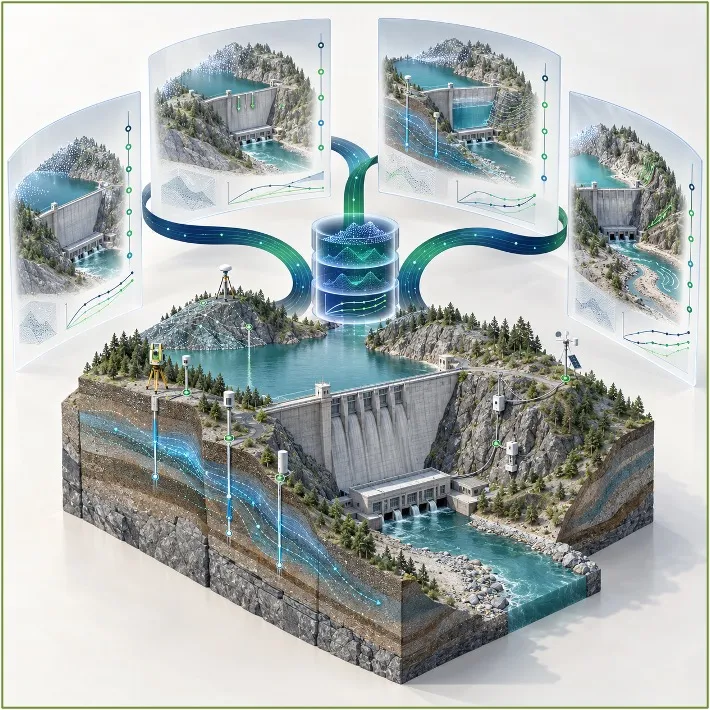
Asset data are truly valuable only when they are accurate, consistent, traceable and connected across project stages. When data are scattered or fragmented, project owners face difficulties comparing results, assessing changes and identifying causes when a facility shows signs of abnormal behaviour.

Building on its foundation inherited from PECC2 and its long-term operational vision, PSC aims to maintain a continuous flow of data from initial surveys, design, construction and acceptance through to operation, maintenance, upgrading and reinvestment.

PSC fulfils its responsibility for data through:

PSC’s commitment extends beyond delivering a report. The company aims to maintain responsibility, accountability and data continuity throughout its involvement in each project.

  • Controlling field data collection processes.
  • Managing samples, test results and technical records.
  • Checking data for completeness, consistency and plausibility.
  • Linking data to location, time, equipment, methods and the personnel involved.
  • Retaining and organizing records for verification and cross-checking when needed.
  • Connecting data across successive survey, inspection and monitoring campaigns.
  • Comparing new results with baseline data and historical asset records.
  • Providing explanations and clarification, and coordinating the resolution of issues relating to PSC’s technical deliverables.
Monitoring assets over time

PSC CONTINUES TO MONITOR ASSETS OVER TIME

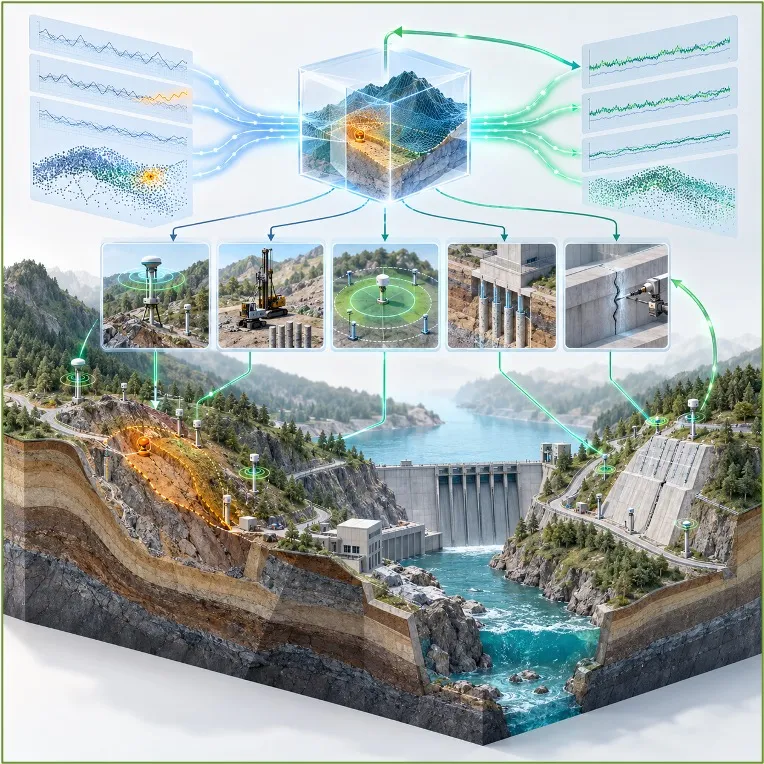
The condition of a facility does not remain unchanged after construction is complete. During operation, it continues to be affected by loads, weather, currents, water levels, erosion, landslides, seismic activity, geological changes, marine conditions and the natural deterioration of materials.

Through periodic survey, inspection and monitoring programmes, PSC can continue to track asset conditions annually or at defined operational intervals. New data are compared with baseline measurements and previous monitoring results to identify trends.

Activities may include:

Maintaining a continuous data record over many years helps project owners understand both the asset’s condition at a particular point in time and how it is changing, how quickly those changes are occurring, and their implications for operational safety.

  • Monitoring settlement, tilt, displacement and deformation.
  • Monitoring water levels, water pressure, seepage and hydrogeological conditions.
  • Assessing changes in terrain, riverbanks, shorelines and areas prone to erosion.
  • Monitoring landslides, slope movements and changes in ground conditions.
  • Inspecting and assessing the condition of materials, structures and foundations.
  • Conducting supplementary surveys at locations showing signs of abnormalities.
  • Assessing changes in technical parameters over time.
  • Updating data to support maintenance, repair, upgrading or expansion.
Identifying changes and recommending solutions

PSC IDENTIFIES CHANGES AND RECOMMENDS TIMELY SOLUTIONS

When data indicate abnormalities, PSC works with relevant parties to analyse the causes, assess their impact and recommend appropriate actions within its area of expertise and the project’s requirements.

Recommendations may include:

Historical data and an understanding of the asset allow assessments to consider its full history and actual changes over time, beyond any individual result. This reduces the risk of unsupported conclusions and helps project owners make timely decisions.

  • Increasing monitoring frequency or expanding monitoring coverage.
  • Conducting supplementary surveys, tests or inspections.
  • Delineating areas requiring special monitoring.
  • Proposing foundation strengthening or soft ground improvement solutions.
  • Repairing identified defects.
  • Monitoring after remedial work to verify the effectiveness of the solution.
  • Updating data to support operation, maintenance and reinvestment.